
Computer Talent or Too Much Screen Time? How to Tell the Difference
Is your child a budding tech genius or simply enjoying passive entertainment? Learn how to distinguish between digital consumption and genuine technical talent.
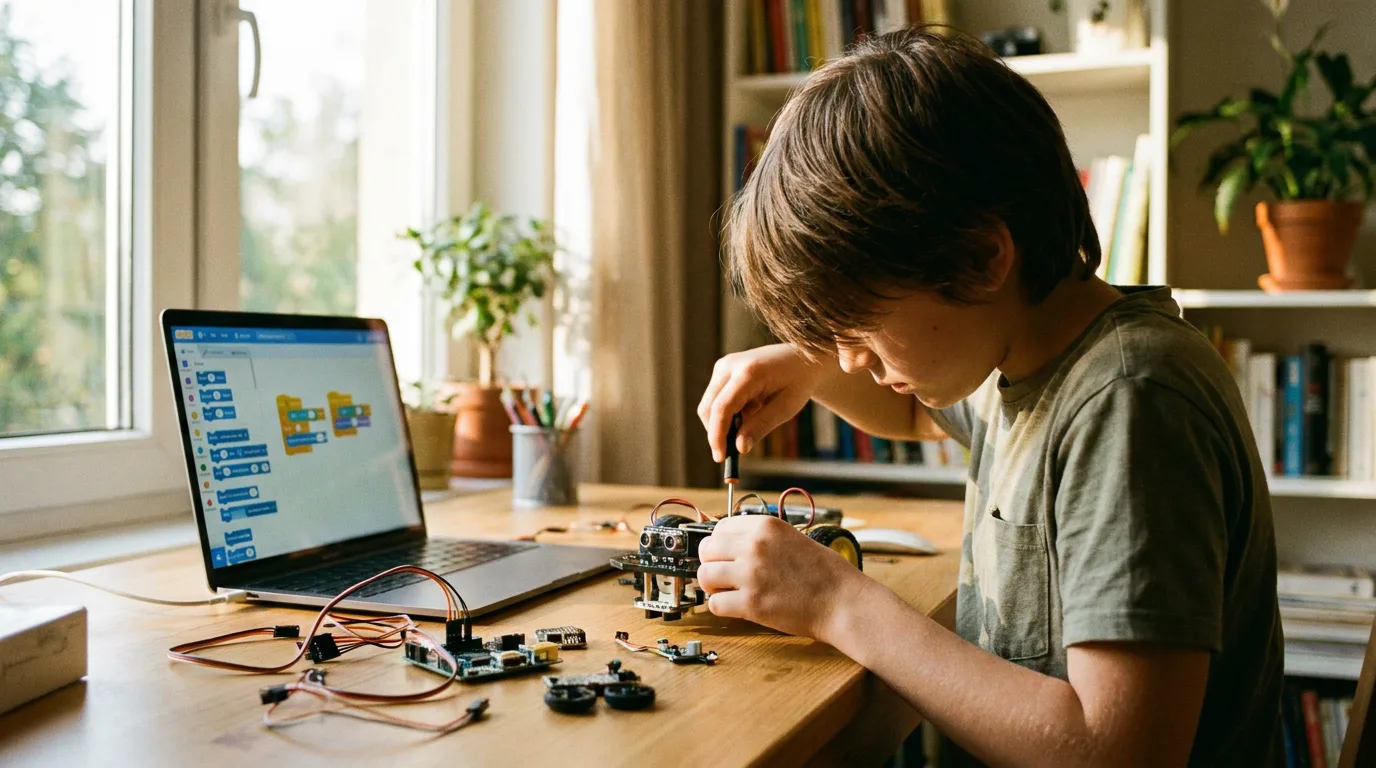
Parents increasingly notice that their children seem naturally comfortable with technology, raising the exciting possibility that a child might have a talent for computers, coding, or technology. However, there is an important distinction to make: a child who spends hours playing video games is not necessarily demonstrating technological talent, and navigating YouTube quickly does not equate to being digitally gifted.
The more useful question for parents to ask is not how much a child uses technology, but rather what they are doing with it. Understanding the difference between familiarity and true technical ability is key to supporting child development support in the digital age.
Consumption vs. Creation
Technology can be used mainly to consume content through videos, social media, and gaming. Alternatively, it can be used to create. A child who naturally moves toward creating with technology may be showing a talent worth exploring. This might include activities like:
Programming and software development
Game design and level building
Editing videos or producing animations
3D design and digital art
Robotics and hardware projects
Signs of Genuine Technical Interest
Talent often reveals itself when something stops working. While one child might lose interest when a programme gives an error, a child with technical aptitude becomes curious about why it failed. This persistence and 'systems thinking'—wanting to know how different pieces connect—is a strong signal of potential.
Troubleshooting is another indicator. If a child enjoys investigating why the Wi-Fi disconnected or why an application is behaving strangely, they are practicing a mindset of observation and testing that is vital in engineering.
Creativity and STEM
The image of a 'computer child' as someone purely focused on numbers is outdated. Modern technology increasingly combines technical and creative abilities. For example, digital creativity is essential for game development, which requires storytelling, and web development, which relies on visual thinking.
Managing Screen Time and Balance
Even if a child is talented, screen time still matters. Productive screen use must exist within a balanced childhood including sleep, physical activity, and face-to-face relationships. Parents should evaluate both the duration and the quality of engagement. Solving a difficult problem in coding for twenty minutes is often more valuable than hours of repetitive educational games.
Testing the Waters
If you suspect your child has a genuine interest, give them an opportunity to build something. For younger children, this could be a simple animation or a Minecraft coding project. For older children, try a small Python project or an app development challenge.
The goal is not to raise a child who can spend the longest time in front of a computer. It is to help a child move from using technology to understanding it—and, perhaps one day, creating something new with it.