
Is Football the Right Sport for My Child? A Guide for Families in Spain
Choosing the right sport for your child involves looking beyond prestigious academies to find the best fit for their personality and enjoyment.
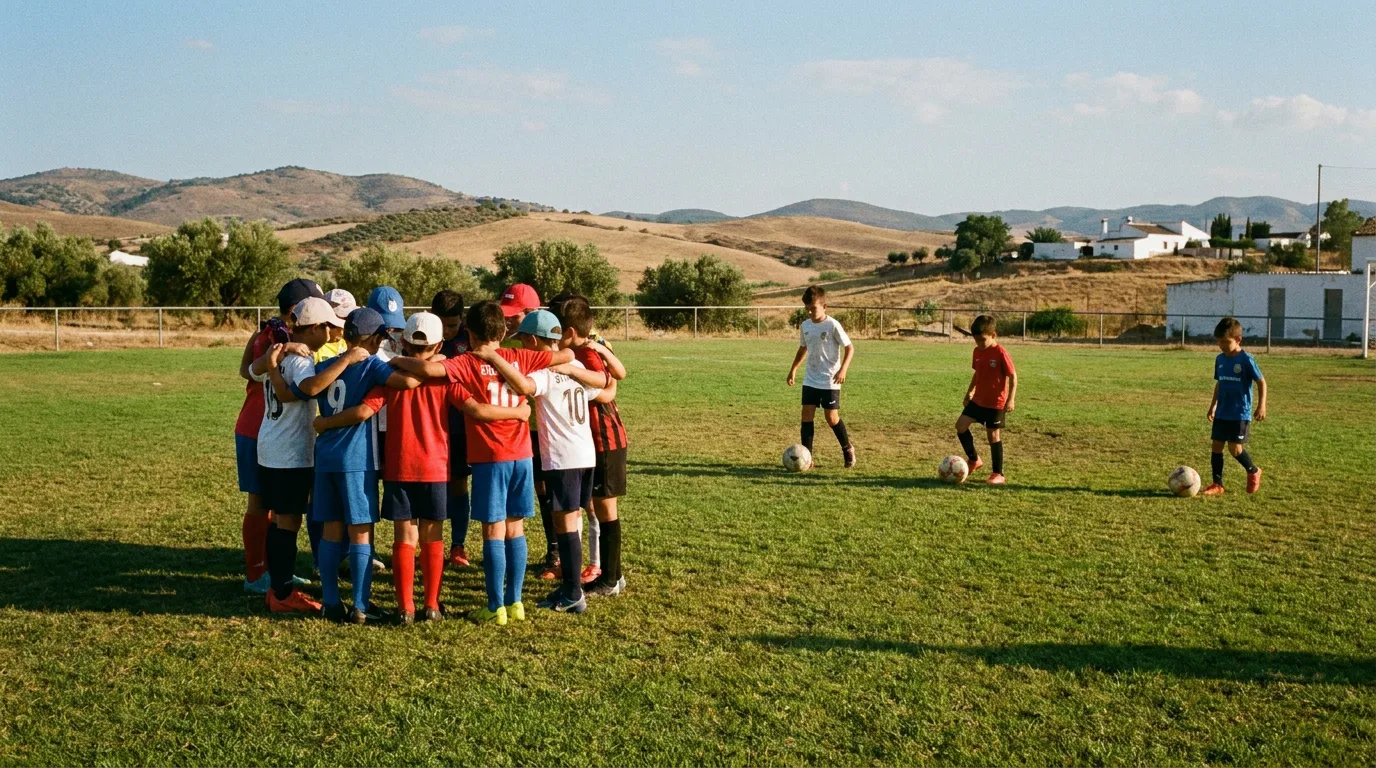
Many parents start by looking for the best football academy. However, a better place to start is with a different question: "Is football the right sport for my child?" A child who enjoys the sport, feels comfortable in the team and looks forward to every training session will usually develop further than a child who joins the most prestigious academy without truly enjoying the experience.
A Combination Few Sports Can Match
Football is one of the few sports that combines three important elements at the same time: teamwork, ball skills and continuous decision-making. Because the game is played with a moving ball, children constantly judge speed, distance and direction while coordinating their eyes, feet and body. This helps develop visual-motor coordination, spatial awareness, reaction speed and anticipation.
At the same time, it teaches something individual sports cannot fully replicate. Every player must communicate, cooperate, and solve problems with teammates. Individual sports such as tennis develop concentration and self-discipline exceptionally well. Football develops many of those same qualities while adding shared decision-making. For many children, experiencing both individual and team sports creates the most balanced development.
Not Every Child Will Enjoy Football
Football is an excellent choice for many children, but not for all. Children who enjoy being surrounded by friends and have high energy often feel at home on a pitch. Other children prefer quieter environments where progress depends entirely on their own effort. Those children may enjoy sports such as swimming or athletics more. There is no universal "best sport"; the best sport is simply the one your child wants to return to next week.
What Spanish Football Gets Right
Spain has spent decades developing technically intelligent footballers and has one of the strongest football cultures in the world. Many youth coaches focus less on winning weekend matches and more on helping children make better decisions with the ball. Players are encouraged to stay calm under pressure and understand the game.
Playing football is very simple, but playing simple football is the hardest thing there is.
This philosophy, shared by figures like Johan Cruyff and former Spain manager Vicente del Bosque, continues to influence youth football in Spain, from local grassroots clubs to professional academies.
Exceptional Opportunities in Spain
For families living in Spain, football is one of the most accessible sports. Families can choose from local clubs, private academies, international schools and holiday camps. The climate in regions such as Andalusia, Valencia, and the Canary Islands allows children to train outdoors throughout much of the year.
In larger cities such as Madrid, Barcelona, or Málaga, there is a particularly wide range of programs. This variety means parents can compare coaching styles and environments before deciding which football program best suits their child's needs.
The Best Age to Start
Many children begin between four and six years old, when sessions focus on movement and enjoyment. From around seven or eight, training becomes more structured. This phase is also vital for general child development support as they learn to navigate social dynamics and physical challenges.
Five Signs Football May Be the Right Choice
Your child may enjoy football if they:
Like playing with friends.
Enjoy active, fast-moving games.
Don't mind sharing success with teammates.
Stay motivated after making mistakes.
Look forward to training without being pushed.
What Research Suggests
Research based on Self-Determination Theory shows that children stay involved in sport when they experience enjoyment, progress and positive relationships. The International Olympic Committee (IOC) also recommends exposing children to a variety of sports during childhood rather than specialising too early to help them develop broader communication skills and movement patterns.
Final Thoughts
Football is much more than learning to pass or score goals. It teaches children how to work with others and make decisions under pressure. The right environment is one where they feel supported and enjoy learning. Kiddonido helps families compare football clubs, academies, and after-school programs across Spain to find the perfect match for each child.