
Preparing Your Child for Future Careers and an Evolving Job Market
Discover how to prepare your child for future careers that don't exist yet by focusing on adaptability, strong foundations, and a project-based approach to learning.
Your child may eventually have a job that does not exist today. That sounds dramatic, but think about how much work has already changed within one generation. Artificial intelligence specialists, cloud engineers, and data scientists are now commonplace. Many of these careers either did not exist or were far less common when today's parents were children. Now, artificial intelligence is accelerating change again.
Parents face a difficult question: how do I prepare my child for a career when I don't even know which careers will exist? The objective should not be predicting your child's exact future job. It should be developing a child capable of adapting when the future arrives.
Stop Trying to Predict the Perfect Career
Parents naturally want certainty in paths like medicine, law, or engineering. However, careers are increasingly likely to change within a person's working life. Even professions that remain important may operate very differently. A doctor may work with AI diagnostic systems, or a programmer may spend less time manually writing routine code and more time designing systems. Education should not merely prepare children to enter their first job; it should help them remain capable of learning their fifth job.
The First Foundation: Learn How to Learn
If your child can learn efficiently, uncertainty becomes less frightening. When they encounter a new technology, they should feel comfortable experimenting and asking questions. Parents should value curiosity and independent learning rather than just correct answers. This intellectual independence is essential for child development support in a rapidly shifting world.
Strong Foundations Are Still the Safest Investment
When the future is uncertain, fundamentals become more important. Children need strong foundations in communication and general scientific understanding. While specific software will change, the ability to understand complex information remains vital. This includes strong habits in reading and writing to ensure they can organise thoughts and build arguments effectively.
Mathematics and Quantitative Literacy
Routine calculation may become automated, but mathematical thinking includes logic, probability, and statistics. These capabilities are useful in finance, technology, and research. Strong quantitative literacy keeps many future doors open, even if your child does not become a mathematician.
Technology Literacy
Not every child needs to become a software engineer, but they should understand the technological environment. This includes basic coding concepts, data privacy, and how digital systems work to avoid technological helplessness.
Creativity and Problem Solving
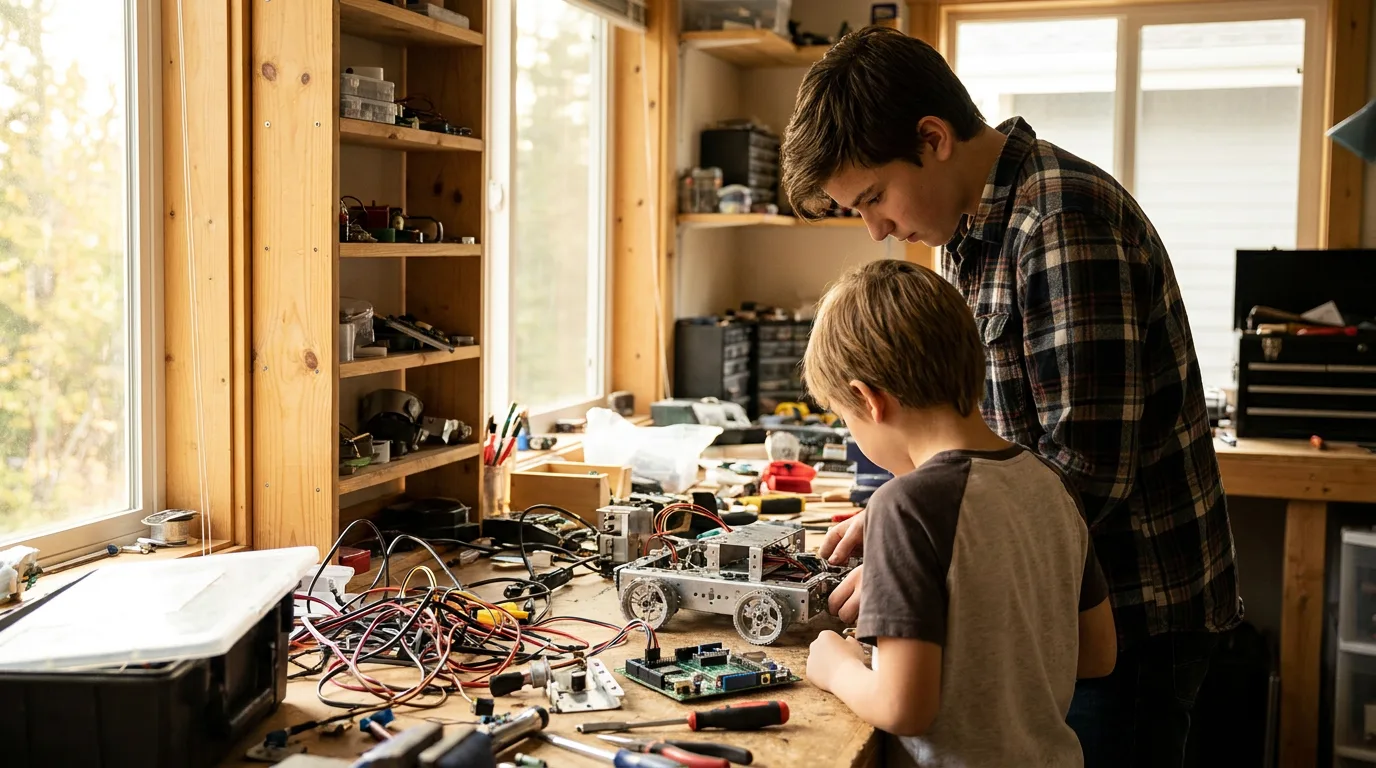
When technology can execute instructions rapidly, deciding what should be created becomes important. Creativity appears in engineering, entrepreneurship, and science. Projects are a great way to foster this, whether a child is interested in game design or building a robot. Projects force children to encounter reality where things go wrong and plans must change.
Should My Child Become a Specialist or a Generalist?
Young children benefit from broad exposure across sport, music, and art. As they grow older, depth becomes valuable. A useful model is T-shaped development: a horizontal line of broad capabilities like collaboration and critical thinking, and a vertical line of deep expertise in one area, such as programming or biology.
Extracurricular Activities as a Laboratory
Extracurricular activities allow children to discover how they engage with different challenges. Whether they enjoy creative writing or team sports, these activities gather information about the child's natural inclinations. Development is not simply the accumulation of credentials; it is about building confidence, discipline, and persistence.
Practical Age-by-Age Approach
Ages 4–7: Prioritise play, language, movement, and curiosity.
Ages 8–11: Increase exposure to sport, music, and science; observe natural attractions.
Ages 12–14: Look for patterns of interest and develop digital literacy.
Ages 15–18: Combine breadth with depth, explore careers, and use AI tools seriously.
Ultimately, you do not prepare a child for a specific job; you prepare the child. Teach them to work with people, let them fail, and help them discover interests. If they reach adulthood with knowledge, adaptability, and curiosity, they will be ready for the professions of the future.