
Speech and Language Milestones for Children: An Age-by-Age Guide
Discover what to expect as your child learns to speak, from their first words at 12 months to complex storytelling at age five, and when to seek professional advice.
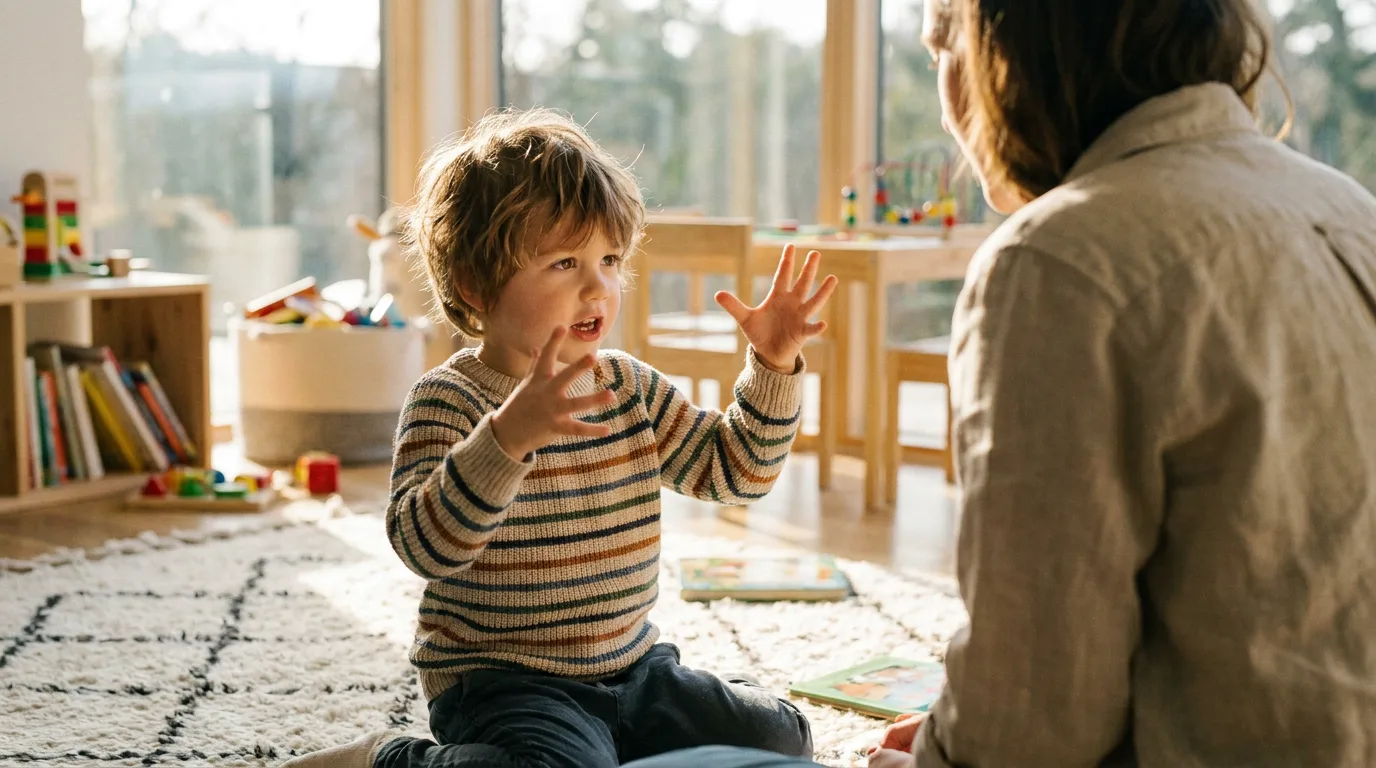
Few parts of early development create as much uncertainty as learning to talk. Parents hear another toddler using sentences, notice that their own child says only a few words and immediately begin to worry about their progress. While word counts are a useful tool, they reveal only one part of a child’s communication development. A child may use relatively few words while communicating effectively through gestures, sounds and eye contact, whereas another may know many words but find it difficult to use language in conversation.
Speech Milestones Are Guides, Not Deadlines
Children do not all develop at the same speed. Developmental milestones describe skills that most children are expected to demonstrate within a broad age range. They are useful for monitoring child development support needs, but they should not be treated as a pass-or-fail test. A vocabulary count cannot diagnose a speech or language disorder; if your child has not reached a particular milestone, it is best to observe their broader communication and discuss concerns with a professional.
What Counts as a Word?
A word does not need to be pronounced perfectly to count. If your child consistently uses the same sound or approximation to mean the same thing, it may count as a word. Examples include "Ba" for ball, "Woof" for dog, or animal sounds and meaningful signs. To count, a word should normally be used intentionally and consistently rather than simply repeating a sound without understanding its meaning.
Age-by-Age Communication Development
12 to 18 Months
By their first birthday, many babies communicate through a combination of babbling, gestures, and early words like "mama" or "dada." By 15 to 18 months, children typically begin to follow simple one-step instructions and use several meaningful words. At this stage, language through play is vital for encouraging imitation and social interaction.
Two Years Old
The second year often brings rapid changes. By age two, many children are beginning to put two words together, such as "more milk" or "car go." This is a significant step because it shows the child is beginning to create new meanings. While many systems suggest a 50-word vocabulary by this age, the ability to learn new words over time is the more important indicator of progress.
Three to Five Years
By age three, children usually speak in short sentences and can hold brief conversations. By age four and five, they transition into storytelling and describing complex experiences. At this stage, communication is closely linked to school readiness, as children use language to negotiate, solve problems, and build friendships.
Bilingual Children
Learning two or more languages does not cause a speech disorder. A multilingual child may know some words in Spanish and others in English. Parents should consider the total vocabulary across all languages. Mixing languages within one sentence is a normal part of development for international families.
When to Seek Professional Support
Consider arranging an evaluation if your child is making little progress, is frequently difficult to understand, or becomes frustrated when communicating. In Spain, a speech and language therapist is usually called a logopeda. Families can access support through the public health system or seek private speech therapy to address specific expressive or receptive language needs.
A Quick Speech Milestone Guide
12 months: Babbling, gestures, and responding to familiar names.
18 months: Using several meaningful words and following one-step instructions.
2 years: Beginning to combine two words and rapidly learning new vocabulary.
3 years: Speaking in short sentences and holding brief conversations.
4 years: Describing experiences and being understood by most adults.
5 years: Telling simple stories and communicating effectively in everyday situations.
Progress over time often matters more than comparison with another child. If you remain concerned, speech and language support services can provide reassurance and practical guidance to help your child move forward.