
What Is the Best Age to Start Music Lessons? Piano, Guitar, Violin and More
Discover when children are ready for formal instrument study and how to build a musical foundation through singing, movement, and play at every stage of development.
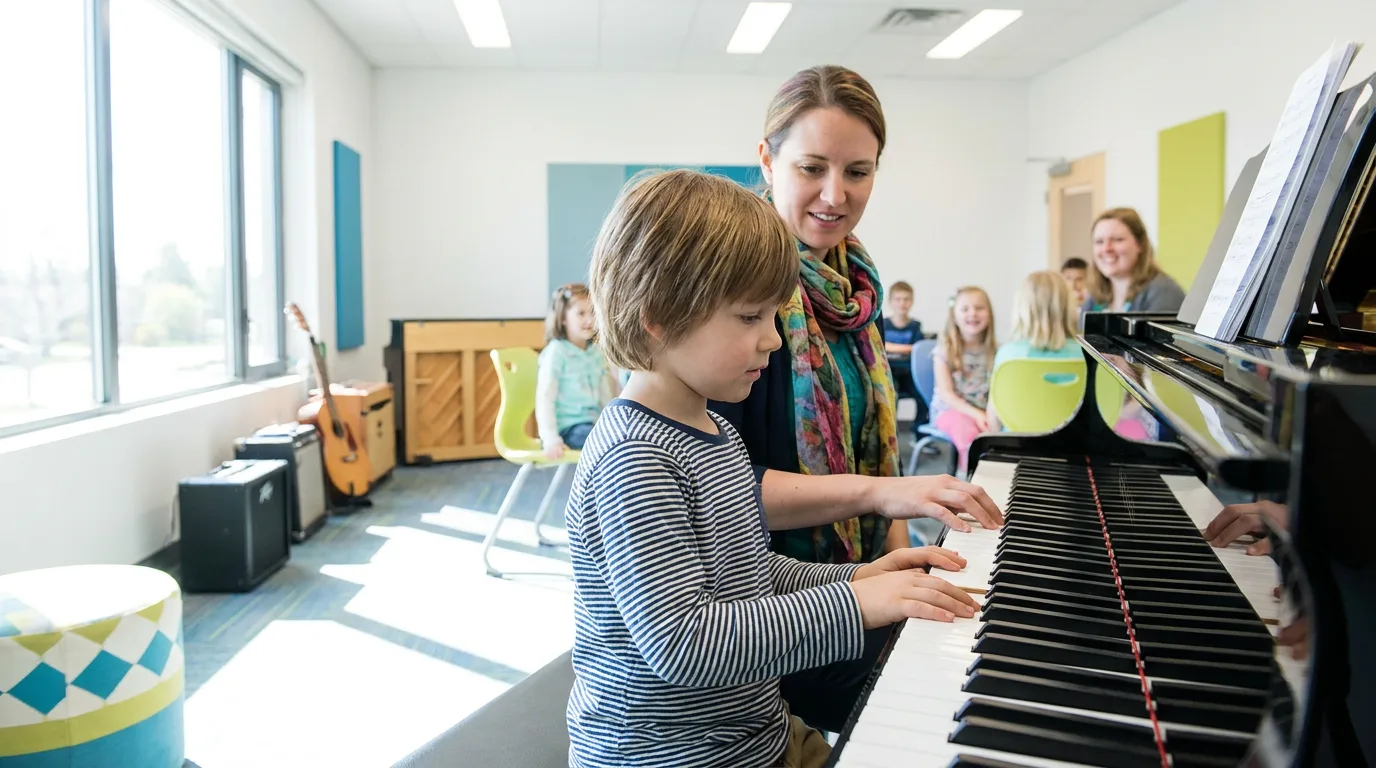
Parents often hear stories about successful musicians who began playing at three or four. This can create the impression that children must start an instrument extremely early or risk falling behind. However, the short answer is that while children can begin developing musical skills from infancy, formal instrument lessons commonly become effective between five and eight, depending on the instrument and the child’s readiness.
Music education does not have to begin with an instrument. Singing, movement, listening and rhythm games can build valuable musical foundations before a child is ready to practise piano, guitar or violin. The best starting age depends on the instrument, the child’s attention span, physical size, and the amount of parental support available.
Music Education Before Instrument Lessons
Babies and toddlers already respond to rhythm, melody, and changes in sound. Early years music experiences can include singing with parents, clapping rhythms, and playing with safe percussion instruments. These activities do not need to look like formal teaching; young children learn through interaction, imitation and repetition.
Music-and-movement programmes often begin during infancy with a parent participating. Between three and five, children can usually take part in more structured group activities. These programmes aim to develop musicality before or alongside formal study, encouraging curiosity rather than testing performance.
Signs of Readiness for an Instrument
Age is only one factor. A child may be ready for instrument lessons if they can focus for 10–20 minutes, follow simple instructions, and copy a short sound or movement pattern. They should also be able to accept gentle correction and handle an instrument safely.
Starting Specific Instruments
Piano and Keyboard
For many children, five to seven is an excellent age to begin structured piano lessons. The piano offers clear visual organisation and allows a child to produce a clear sound immediately. Some teachers begin through listening and movement before introducing traditional reading and writing of musical notation.
Violin and Cello
Violin and cello can often begin between four and six when the instrument is correctly sized. Unlike the piano, string instruments require the child to learn posture, bow movement, and pitch control simultaneously. This often requires significant parental involvement during home practice sessions.
Guitar and Ukulele
Many children are ready for guitar between six and eight. The ukulele can be a useful first string instrument for younger children because it is smaller, lighter, and easier to hold. Classical guitars with nylon strings are often more comfortable for beginners than steel-string models.
Singing and Voice
Children can sing from a very young age, but formal singing and vocal training should be adapted carefully to the developing voice. Early classes should focus on pitch matching, breathing without strain, and musical confidence. During puberty, a qualified teacher must adapt repertoire as the voice changes significantly.
Music Education in Spain
Families in Spain have various options, from private schools to official conservatories. In regions like Andalucía, Basic Music Education is intended for children aged eight to twelve, requiring an aptitude assessment for entry. However, many children begin earlier through local music schools or private tutors to build their skills.
Whether pursuing a recreational pathway or preparing for language exam preparation and music theory, the right teacher is essential. A good instructor balances technical correction with encouragement, helping the child move from curiosity to genuine musical confidence.