
What Is the Best Age to Start Swimming Lessons? A Complete Guide for Parents
Learn when babies and children should start swimming lessons, from water familiarity to competitive training, and discover how to choose a safe programme in Spain.
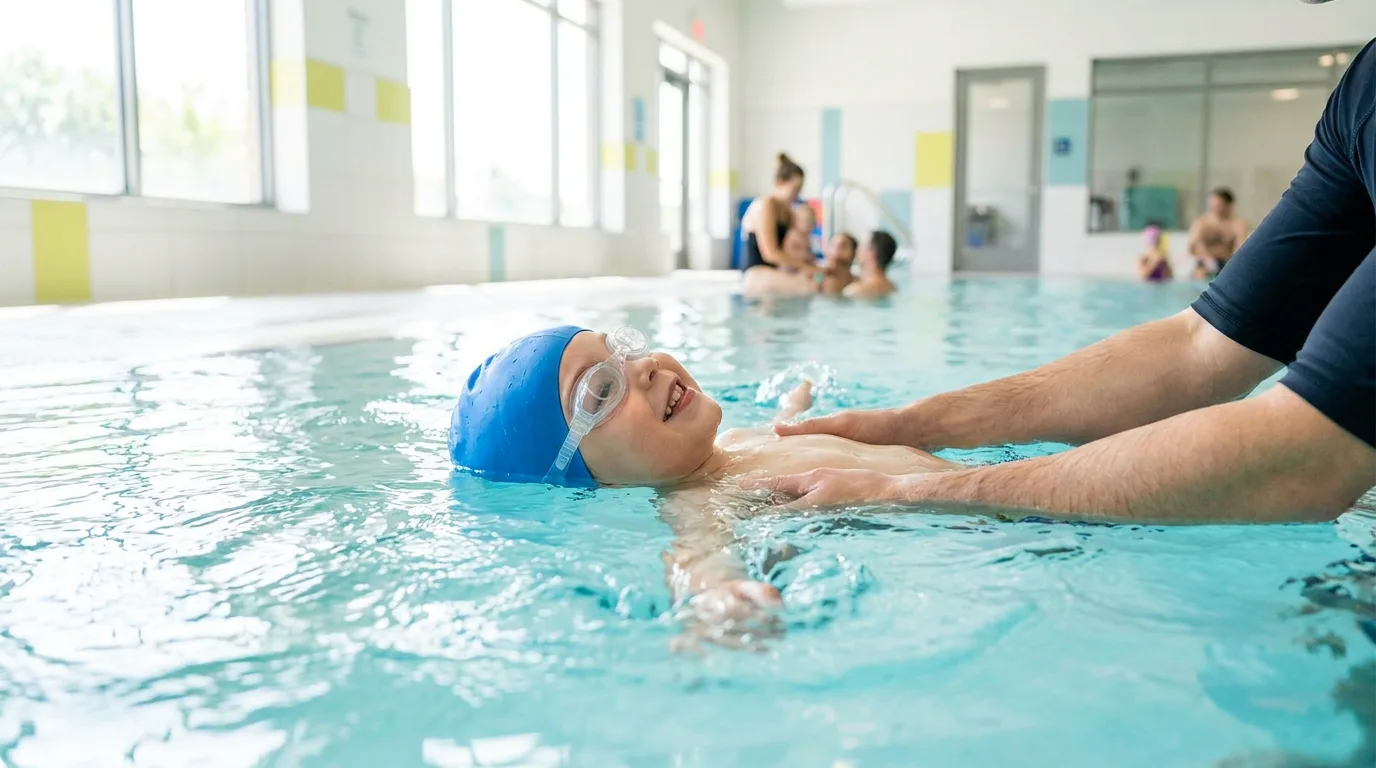
Learning to swim is different from learning most other sports. It can provide enjoyment, fitness and confidence, but it is also an important safety skill—especially for families living near pools, beaches, rivers or other bodies of water.
Many children can begin parent-and-child swimming lessons after their first birthday, depending on readiness. By around four, most children are ready for more structured lessons and can begin learning independent water-survival skills. However, no swimming lesson can make a child "drown-proof". Lessons should always be combined with close supervision, restricted access to pools, and other layers of water safety.
Can Babies Start Swimming?
Babies can be introduced to water in a warm, hygienic pool with a parent or caregiver. Many programmes accept babies from approximately six months, but the purpose should be water play and familiarity rather than independent swimming. The American Academy of Pediatrics does not recommend infant classes under one as a proven drowning-prevention measure.
After a child’s first birthday, swimming lessons may become an additional layer of water protection. Readiness depends on emotional maturity, physical development, and the child's individual developmental needs.
Independent Swimming and Survival Skills
Around age four, many children are ready to participate in swimming lessons without a parent in the pool. At this stage, they are generally more able to follow a short sequence, control their breathing, and understand simple safety rules.
Important early skills include:
Entering the water safely and returning to the surface
Floating on the front and back and rolling between them
Treading water and moving towards a wall or exit
Understanding they must never swim alone
By age six, many children can develop front crawl skills, though progress varies. It is never too late to start; older beginners often have better attention and a stronger ability to analyse technique.
Water Safety for Families in Spain
Spain offers extensive access to water through municipal pools, beach resorts, and water parks. This makes water education particularly valuable. Families should always choose lifeguarded areas and respect local warning systems, such as the yellow and red flags on beaches.
For children who need additional help with instructions, some providers offer sessions that focus on specific communication skills or adapted environments for those with sensory preferences.
Competitive Swimming and Club Development
Children can begin basic club development after they have acquired safe and efficient skills. Many clubs introduce more structured development between ages seven and ten. According to the Real Federación Española de Natación, national competition categories begin at age nine with the Prebenjamín level.
Choosing a Safe Programme
A quality programme should have qualified instructors, lifeguards with current CPR training, and age-appropriate teaching methods. Parents can use Kiddonido to discover and compare swimming schools and clubs across Spain, filtering by age, level, and location.
When evaluating a school, notice whether children are active for most of the lesson and treated calmly. Avoid programmes that claim to make children drown-proof or force distressed children underwater. Confidence develops best through successful, controlled experiences.