What Is the Best Age to Start Tennis? A Complete Guide for Parents
Discover when children should begin tennis lessons, the importance of age-appropriate equipment, and how to choose the right junior academy in Spain.
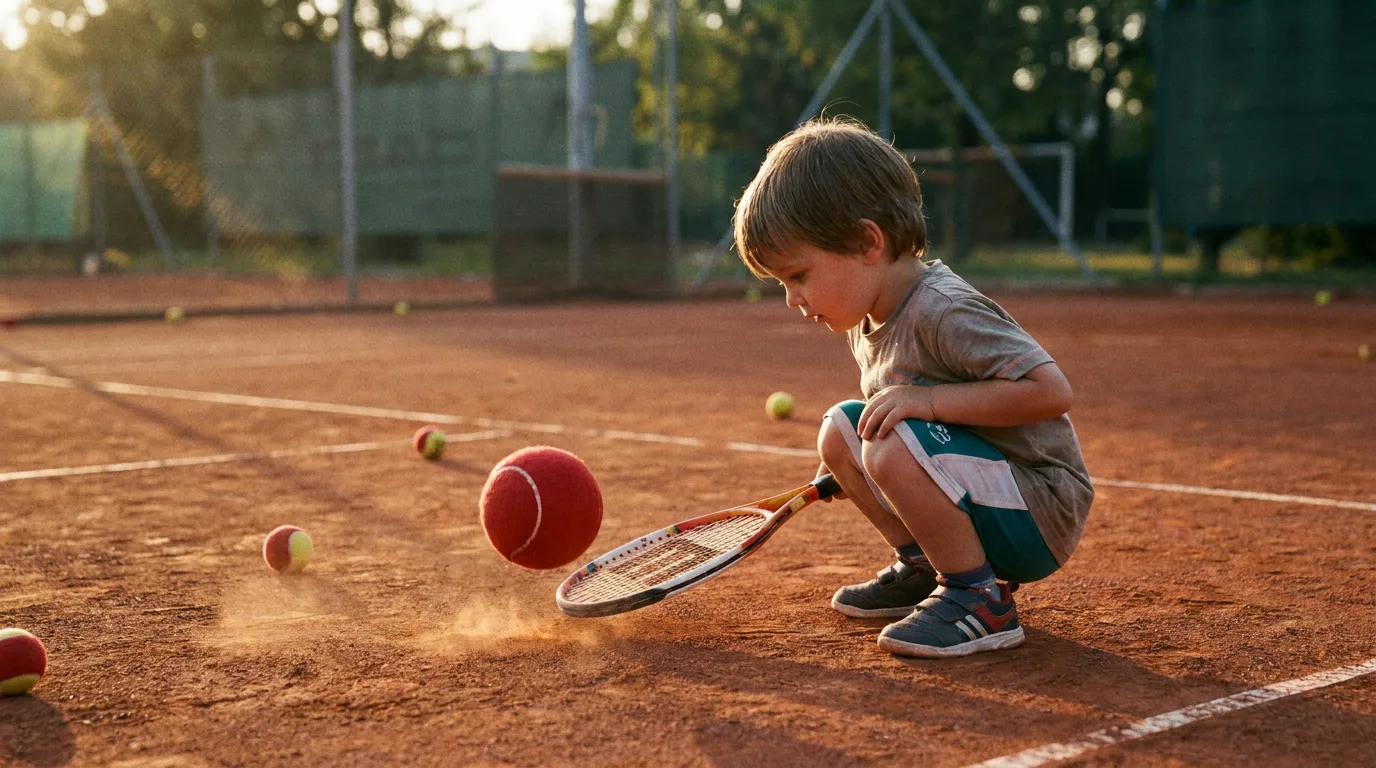
Many parents wonder whether their child should start tennis at three, five or seven years old—especially if the child enjoys sport or shows unusual coordination. Others worry that they may already be too late. The short answer is that most children can be introduced to tennis between the ages of three and five, while structured tennis lessons often become more effective between five and seven.
However, starting early does not mean training intensively. A three-year-old playing with a foam ball is having a very different experience from an eight-year-old following a competitive development programme. The best starting age depends on the child’s physical development, attention span, motivation and the quality of the programme. The right equipment and coach are often more important than beginning a year earlier.
Can a Three-Year-Old Start Tennis?
Yes, but tennis at three should be based almost entirely on play. At this age, children are not ready for adult-style technical instruction. Their attention span is short, balance is still developing and tracking a moving ball can be difficult.
An appropriate tennis class for children aged three or four might include running and stopping games, throwing and catching large balls, and hitting foam or low-compression balls. The goal is to help the child enjoy movement, become comfortable with a racket and develop basic coordination through language through play or similar active methods.
What Is the Best Age for Structured Tennis Lessons?
For many children, five to seven is an excellent age to begin structured tennis lessons. By this stage, most children can follow short instructions, repeat basic movements and participate in simple games with other children. Their hand-eye coordination and ability to track a moving object are also improving.
A good beginner programme should teach children how to hold and control an appropriately sized racket, move towards the ball, and understand basic court boundaries. It is also a time where some parents look for broader child development support to ensure their young athlete is growing in a balanced way.
Why Children Should Not Start with Adult Tennis Equipment
Young children should not be expected to learn with an adult racket, a standard yellow ball and a full-size court. The International Tennis Federation’s Tennis10s system uses slower balls, smaller courts and shorter rackets for children aged ten and under.
Red Stage Tennis: Red balls are larger and 75% slower than standard balls, suitable for children up to approximately eight years old.
Orange Stage Tennis: Orange balls are 50% slower than yellow balls and are used on a medium-sized court, typically for ages eight to ten.
Green Stage Tennis: Green balls are 25% slower than standard balls and are used on a full-size court for advanced players around nine or ten.
What Age Should a Child Start Tennis to Become a Professional?
There is no starting age that guarantees a professional career. Many successful players were introduced to tennis between three and six, but their early experiences were not necessarily intensive professional training. In Spain, the Real Federación Española de Tenis uses a long-term player-development model that moves from discovery at ages 4–6 through to performance at 16–18.
Is It Too Late to Start Tennis at Eight, Ten or Twelve?
No. Tennis can be started at almost any age. A child who starts later may have several advantages, including better concentration, greater body awareness and stronger personal motivation. An eight- or ten-year-old beginner may progress through the first stages much faster than a preschool child.
How Many Hours a Week Should a Child Play?
Training should increase gradually according to age, experience and motivation. A child aged 5–7 might attend 1–2 sessions per week, while a developing player aged 9–12 may attend 2–4 sessions. Parents should watch for warning signs of excessive training, such as persistent shoulder or knee pain. In such cases, seeking physiotherapy can be vital for recovery.
Group Lessons vs Private Coaching
Group classes help children make friends, learn by watching others, and develop social confidence. In contrast, private lessons offer individual feedback and a programme adapted to the child’s specific learning style. For many, the best option is a regular group programme combined with occasional private sessions.
For international families in Spain, language can be an important factor. If your child is also working on their communication skills, you might look for english speaking coaches or academies that cater to bilingual students to ensure they understand every technical instruction.
Finding Tennis Classes in Spain
Spain offers an excellent environment for children who want to learn tennis. Many regions benefit from mild weather, outdoor courts and a strong club culture. Kiddonido helps families discover and compare tennis classes, junior academies, and private coaching options across the country, ensuring you find the right environment for your child's age and goals.